Yarn Swift and Ball Winder Setup: A Complete How-To
By FiberCroft . 8 min read . Updated June 2026
Buying yarn in skeins is the norm for indie dyers and most good yarn shops, and a skein is a loose loop that will tangle into a snarled mess if you try to knit directly from it. The solution is a two-tool system: a yarn swift holds the skein open and lets it rotate while a ball winder converts it into a stable, center-pull cake. Set up correctly, the pair can wind a 100g skein in two to three minutes with no tangles. This guide covers how to set up and use both tools, what separates a good swift from a cheap one, and which combinations work best, including the Stanwood Needlecraft Wooden Umbrella Swift (Medium) with the Stanwood Needlecraft Large Metal Ball Winder (10 oz) as a starting point.
Quick answer
The Stanwood Needlecraft Wooden Umbrella Swift paired with the Stanwood Large Metal Ball Winder is the best yarn winding combination for most fiber crafters, handling skeins up to 10 ounces with smooth, stable performance. Clamp both to a table edge at a distance that keeps gentle tension between the tools. A ceramic yarn bowl keeps the finished cake feeding cleanly.
This guide contains affiliate links. FiberCroft may earn a commission at no cost to you.
How a swift and ball winder work together
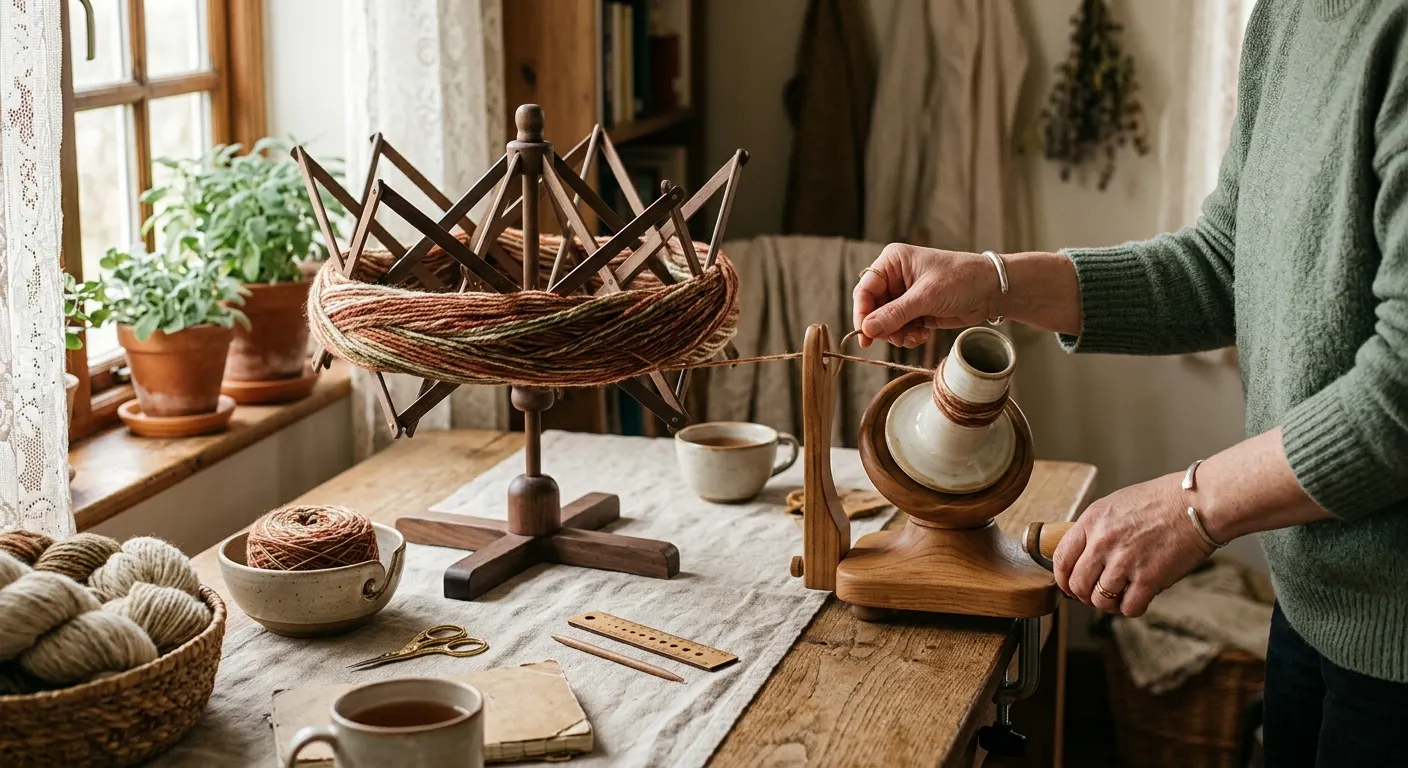
A yarn swift is a rotating frame, typically in an umbrella shape, that you clamp to a table edge. You drape the skein around the arms of the swift, expand the arms until the skein is taut but not stretched, and then pull the tied end free to leave a clear starting tail. The swift spins freely as the winder draws yarn off the skein.
The ball winder clamps to the same table or a nearby surface. You thread the tail through the winder's yarn guide, wind a few turns around the center spindle by hand to anchor it, then crank the handle steadily. The winder's gear mechanism wraps the yarn in a cross-wound pattern that produces a dense, stable cake with a center pull point in the middle.
The two tools need to be positioned so the yarn travels at a comfortable angle between them with gentle but consistent tension. Too close and the yarn goes slack and tangles in the winder. Too far and the swift struggles to keep up with the winder's draw, causing the skein to tighten and potentially snap a join in fine yarn.
What to look for in a yarn swift
Smooth arm surfaces are the most important quality in a swift. Any rough spot or splinter on a wooden arm will snag yarn, which is particularly destructive with delicate hand-dyed singles or lace weight. The Stanwood Needlecraft Wooden Umbrella Swift (Medium) uses birch wood that is sanded smooth enough to handle even fingering-weight yarn without snagging.
The second key factor is adjustment range and stability. A swift needs to expand enough to hold larger 200g skeins without the arms slipping under tension. The adjustment mechanism should hold the set position without gradually loosening as the swift spins. C-clamp swifts that clamp to a table edge are significantly more stable than base-weighted swifts, which can wobble and drop the skein mid-wind.
Avoid very cheap plastic swifts with exposed screw heads or rough molded arms. The savings are small and the yarn-snagging risk is real.

Stanwood Needlecraft Wooden Umbrella Swift (Medium)
Smooth birch wood umbrella swift with a table-clamp base that holds skeins up to a large size. Winds without snagging and adjusts for different skein circumferences.
What to look for in a ball winder
Capacity and gearing quality are the two specs that determine whether a ball winder is a long-term tool or a frustration. The Stanwood Needlecraft Large Metal Ball Winder (10 oz) handles up to 10 ounces per wind and uses metal gearing that will not strip or seize the way plastic gearing does under continuous use.
The Knit Picks Yarn Ball Winder (100g Capacity) is the right starting point for someone setting up their first winding station on a budget. It handles yarn from lace to bulky, has a compact footprint, and is plastic throughout, which means the gearing will show wear over time with heavy use. For occasional winding, it holds up fine. For multiple skeins every week, the metal Stanwood is the better long-term investment.
Both winders produce center-pull cakes that feed cleanly from the middle. The center pull point is created by the center spindle, and once the cake is removed you simply tuck the end back in loosely to preserve it.

Stanwood Needlecraft Large Metal Ball Winder (10 oz)
Heavy-duty metal ball winder with a 10-ounce capacity and a smooth gearing mechanism. The most popular standalone winder for crafters who regularly wind large skeins.
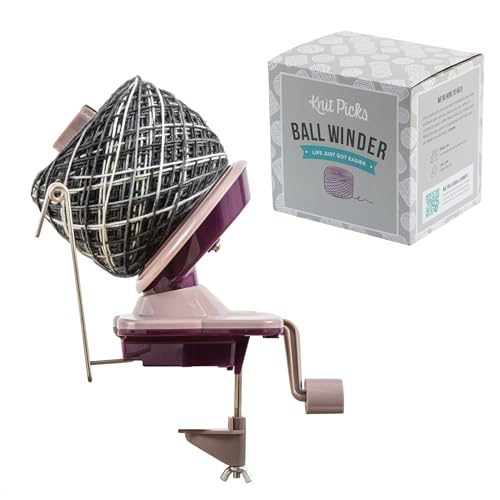
Knit Picks Yarn Ball Winder (100g Capacity)
A compact, affordable plastic ball winder that works with all yarn weights from lace to bulky and is compatible with most table clamps. A good entry-level option for new winding setups.
Using a yarn bowl to keep your cake feeding cleanly
Once you have wound your skein into a cake, a yarn bowl keeps it from rolling across the floor while you knit. A ceramic bowl with a spiral slot feeds yarn through the opening as the ball unwinds, maintaining a light tension that keeps the yarn from piling up between needle pulls.
The Handmade Ceramic Yarn Bowl with Spiral Slot is the standard recommendation in this category. The heavy ceramic base prevents tipping even when the yarn pulls at an angle, and the spiral slot keeps the yarn from slipping out of the feed channel. A ceramic bowl also sits well on a side table as a piece of decor when not in use.
Project bags can also serve as a yarn holder for travel, but at home a fixed bowl is generally more convenient because it does not require opening a bag to check the remaining yarn quantity or to swap needles.

Handmade Ceramic Yarn Bowl with Spiral Slot
A hand-thrown ceramic bowl with a curved spiral slot that feeds yarn smoothly while keeping a ball from rolling away. A functional and aesthetic addition to any knitting setup.
Step by step: winding your first skein
First, clamp the swift to the table edge and expand the arms until they support the skein at a slight tension. Find the tied knot holding the skein together and cut or untie it, then locate the end of the yarn that was tucked in at the tie point. This is your start tail.
Clamp the ball winder within arm's reach of the swift, typically 60 to 90 centimeters away, at the same table. Thread the yarn tail through the yarn guide on the winder arm, bring it down to the center spindle, and wind three or four turns by hand to anchor it.
Crank the winder handle at a consistent, moderate speed. The swift will rotate to keep up. If the skein tightens unexpectedly, stop and look for a tangle or a crossing loop on the swift arms. Tangles are easiest to resolve before they get tight. Once the full skein is wound, tuck the end tail into the center pull point to mark it, then slide the cake off the spindle.
Featured in this guide
Stanwood Needlecraft Wooden Umbrella Swift (Medium)
Smooth birch wood umbrella swift with a table-clamp base that holds skeins up to a large size. Winds without snagging and adjusts for different skein circumferences.
Stanwood Needlecraft Large Metal Ball Winder (10 oz)
Heavy-duty metal ball winder with a 10-ounce capacity and a smooth gearing mechanism. The most popular standalone winder for crafters who regularly wind large skeins.
Knit Picks Yarn Ball Winder (100g Capacity)
A compact, affordable plastic ball winder that works with all yarn weights from lace to bulky and is compatible with most table clamps. A good entry-level option for new winding setups.
Handmade Ceramic Yarn Bowl with Spiral Slot
A hand-thrown ceramic bowl with a curved spiral slot that feeds yarn smoothly while keeping a ball from rolling away. A functional and aesthetic addition to any knitting setup.

Della Q Maker's Collection Knitting Project Bag
Canvas project bag with a dedicated yarn grommet feeder, interior needle pocket, and antique brass hardware. Designed for crafters who want functional organization and a polished look.
Keep reading
Related comparisons
Related roundups
FAQ
Frequently asked questions
Can I wind yarn directly from a skein without a swift?+
Technically yes, but it is significantly harder and slower. Without a swift, you typically drape the skein over a chair back or ask someone to hold it around their arms while you wind. Both methods risk tangles because the skein cannot rotate freely. A swift solves the rotation problem and lets you wind cleanly in minutes. It is a small investment that pays for itself in time saved on the first large skein.
Why does my ball winder produce a loose, floppy cake?+
A loose cake usually means the yarn was under too little tension during winding. Make sure the swift is holding the skein taut but not strained, and wind at a consistent moderate speed rather than slowly. Very slow winding lets the yarn lay loosely between wind-ons. If the problem persists, check that the winder is clamped securely to the table, because a winder that rocks slightly under cranking will produce uneven tension.
How do I handle a tangled skein on the swift?+
Stop winding immediately when you feel resistance. Tangled skeins get worse the more you pull. Find the crossing point on the swift arms and gently lift the crossed loop over the arm rather than pulling through. Most tangles in a properly placed skein are single crossings that resolve in seconds when you stop and look. Trying to power through a tangle risks snapping the yarn at a weak join in hand-dyed skeins.